

Study habits are the routines and strategies students use to learn, retain information, and prepare for tests. In high school, these habits become especially important as academic expectations increase, and students are required to take on more responsibility for their learning.
High school is a major step up from earlier grades. Students are expected to manage multiple subjects, prepare for exams, and think more critically about what they’re learning. For many, the challenge isn’t just understanding the material: it’s knowing how to study effectively.
That’s where Empower Tutoring can make a difference. We offer private online tutoring to help students build strong study habits alongside their academic skills.
The good news is that strong study habits can be learned. With the right strategies, students can improve their focus, retain information more easily, and feel more confident in class.
Here are some study tips that actually work for high school students while helping build long-term academic success.
Key Takeaways
- Consistency beats cramming: short, regular study sessions are more effective than last-minute studying.
- Active engagement in class reduces the need to relearn material later.
- Strong note-taking and organization make studying faster and more effective.
- Time management and planning help balance multiple subjects and deadlines.
- Understanding concepts is more important than memorization for long-term success.
- Asking for help early prevents small gaps from becoming bigger problems.
- Motivation and mindset directly impact consistency and academic performance.
- Healthy study habits, like minimizing distractions and taking breaks, improve focus.
- Parental support can reinforce structure, accountability, and consistency.
- Extra support, like tutoring, can provide personalized strategies and boost confidence.
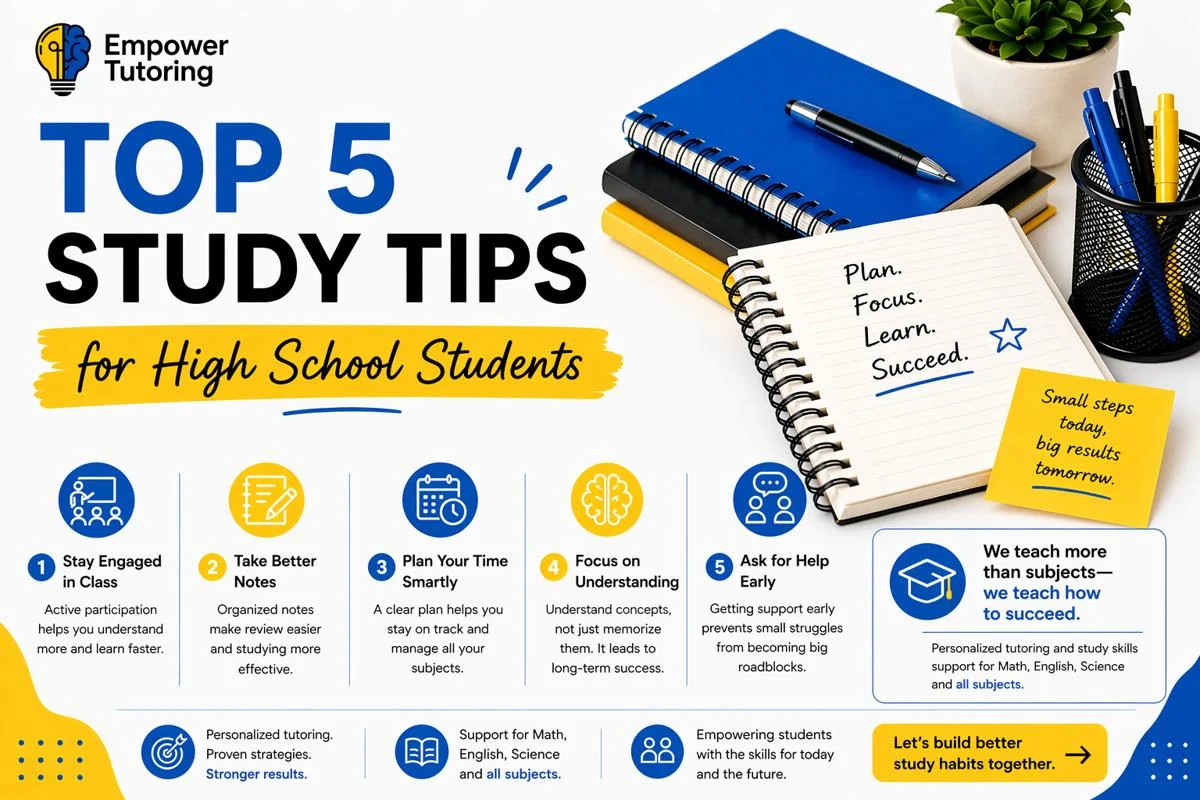
Empower Tutoring’s Top 15 Study Tips for High School Students
1. Stay Actively Engaged in Class
One of the most effective study strategies starts before you even sit down to review. Active engagement in class like listening carefully, asking questions, and participating in discussions helps students understand concepts the first time they encounter them.
Instead of passively copying notes, students should focus on understanding why concepts work. This reduces the amount of time needed to relearn material later!
2. Build Strong Note-Taking Skills
Good note-taking is the foundation of effective studying. Organized notes make it easier to review key ideas, identify patterns, and prepare for tests.
Students should aim to summarize information in their own words, highlight important concepts, and keep notes structured. Rather than just jotting down word-for-word what a teacher says, methods like bullet points, headings, and diagrams can make a big difference when it comes time to study.
3. Create a Study Plan and Manage Your Time
Time management and planning are critical for high school success. Cramming the night before rarely leads to strong results, especially in subjects like math and science that require a deeper understanding over time.
Instead, students should break assignments and studying into smaller, manageable chunks. Using a weekly schedule or planner can help students ensure that all subjects are covered consistently and deadlines are met without unnecessary stress.
4. Develop Healthy Study Habits
Healthy study habits go beyond just sitting at a desk. Creating a consistent routine, minimizing distractions, and taking regular breaks can significantly improve focus and productivity.
A dedicated study space, limited phone use, and techniques like the Pomodoro method (focused work intervals with short breaks) can help students stay on track.
5. Focus on Understanding, Not Memorization
Memorization might work for short-term recall, but true academic success comes from understanding. Students should aim to explain concepts in their own words, apply them to new problems, and connect ideas across subjects.
This approach is especially important in subjects where skills are built over time and require critical thinking.
6. Ask for Help and Seek Clarification Early
Seeking help and clarification is a key part of effective learning. When students don’t understand something, waiting too long to ensure comprehension can make it harder to catch up.
Teachers, classmates, and tutors can all provide valuable support. Many students benefit from our private tutoring services, which focus on personalized learning and long-term understanding rather than short-term fixes.
7. Stay Motivated with the Right Mindset
Motivation and mindset play a huge role in academic success. Students who believe they can improve are more likely to stay consistent and put in the effort needed to succeed.
Setting realistic goals, tracking progress, and celebrating small wins can help maintain motivation over time. A growth mindset encourages students to see challenges as opportunities to learn, rather than obstacles.
8. Use Practice and Repetition Effectively
Practice is essential for reinforcing what you’ve learned. Working through problems, reviewing past tests, and completing practice questions helps strengthen understanding and improve performance.
Instead of repeating the same type of problem, students should challenge themselves with different question styles to deepen their learning.
9. Involve Parents in the Learning Process
Parental support and involvement can make a meaningful difference in a student’s academic journey. This doesn’t mean doing the work for them, but rather providing structure, encouragement, and accountability.
Simple actions like checking in on progress, helping create a study schedule, or providing a quiet space can support better study habits and consistency.
10. Consider Extra Academic Support When Needed
Sometimes, students need additional help to fully understand certain subjects or stay on track. Working with a tutor can provide personalized guidance, targeted practice, and strategies tailored to a student’s learning style.
This kind of support can be especially helpful for challenging courses or during exam preparation, helping students build confidence and improve results over time.
11. Teach What You’ve Learned
One of the most effective ways to reinforce understanding is to teach the material to someone else. Explaining concepts out loud helps identify gaps in knowledge and strengthens memory. Even studying with a friend or pretending to “teach” a lesson can make a big difference in how well information is retained.
12. Use Different Study Methods
Not all subjects should be studied the same way. Mixing methods like flashcards, practice problems, summaries, and visual aids can improve retention and keep studying engaging.
This is especially useful for students with different learning preferences, helping them stay focused and absorb information more effectively.
13. Review Material Regularly
Instead of only studying before tests, students should review material consistently throughout the term.
Regular review helps move information from short-term to long-term memory. Even spending 10–15 minutes revisiting notes each day can significantly improve retention and reduce exam stress.
14. Set Clear Goals for Each Study Session
Studying without a goal can lead to wasted time and frustration. Before each session, students should define what they want to accomplish, whether it’s completing a set of problems, reviewing a chapter, or mastering a concept. Clear goals create focus and make study sessions more productive.
15. Take Care of Your Physical and Mental Health
Academic success isn’t just about studying, it’s also about overall well-being. Getting enough sleep, eating well, and staying active all contribute to better focus and memory.
Students who take care of their mental health are better equipped to manage stress, stay motivated, and perform at their best.
How Empower Tutoring Supports Strong Study Habits Across All Subjects
Effective studying isn’t about spending more time; it’s about using the right strategies consistently and with the right support. That’s exactly where Empower Tutoring comes in.
Our approach focuses on helping students build the core habits behind academic success: active engagement, structured note-taking, time management, and confidence in asking questions. Whether a student needs help in math, English, or science, these study skills are reinforced in every session.
Rather than just reviewing homework, our tutors teach students how to learn by breaking down complex concepts, building effective routines, and developing strategies that apply across all subjects. This aligns with our approach, which prioritizes long-term understanding over short-term results.
With consistent guidance from our experienced private tutors, students don’t just improve their grades. They become more independent, organized, and confident learners.
Frequently Asked Questions About Study Habits for Kids
How many hours should a high school student study per day?
How many hours a student should study depends on the student and their course load, but most high school students benefit from 1–3 hours of focused study per day outside of class.
Quality matters more than quantity! Short, focused sessions are more effective than long, distracted ones.
What is the best way to stay focused while studying?
Creating a distraction-free environment, using techniques like timed study intervals, and setting clear goals for each session can help improve focus. Taking short breaks between study blocks also helps maintain concentration.
How can I improve my time management for studying?
Using a planner or digital calendar to schedule study sessions, breaking tasks into smaller steps, and prioritizing deadlines are key strategies. Consistency is more important than intensity when it comes to time management.
Why is active learning better than passive studying?
Active learning, such as solving problems, explaining concepts, or teaching others, forces the brain to process information more deeply. Passive methods like rereading notes are less effective for long-term retention.
When should a student consider getting a tutor?
A student should consider getting a tutor when they consistently struggle with certain subjects, feel overwhelmed, or want to improve their grades. Early support can prevent small gaps in understanding from becoming larger issues.
How can parents support better study habits at home?
Parents can help by creating a structured routine, providing a quiet study space, encouraging consistency, and checking in on progress. Support and accountability are often just as important as the study strategies themselves!
Do study habits really impact academic success?
Yes, strong study habits are one of the biggest predictors of academic success. Students who manage their time well, stay organized, and actively engage with material tend to perform better and feel more confident in school.